iSPEX
Scientific power in people's pockets.
iSPEX 2 is a research-grade spectropolarimeter, validated in 2025 for above-water remote-sensing reflectance (Rrs) measurements with Plymouth Marine Laboratory. Our research kits are currently being used in scientific studies for water quality measurements and advanced spectral analysis. We collaborate closely with academic institutions and research laboratories worldwide.
Citizens should not only report environmental change — they should be able to measure it. iSPEX turns an ordinary smartphone into a scientific optical instrument: a small diffraction-grating add-on plus a companion app that calibrates the phone's camera into a real measurement device. That belief — that a phone can be part of the measurement itself, not just a screen between a person and a database — is what Pocket Science has built iSPEX around.
How it started
iSPEX began in 2013, in its original form, as a nationwide Dutch citizen-science campaign to measure atmospheric aerosols (dust particles) with a smartphone add-on. The iSPEX team, led by Frans Snik of Leiden University, had thousands of participants perform measurements throughout the Netherlands on three cloud-free days that year. Each measurement recorded the spectrum and linear polarization of sunlight scattered by suspended dust particles, which the team converted to Aerosol Optical Thickness (AOT) after quality-checking and averaging the submitted data.
The resulting AOT maps matched comparable data from satellites and the AERONET ground station at Cabauw, and in areas with dense enough measurements could resolve detail down to about 2 km — finer than satellite data, and filling blind spots between established ground-based monitoring stations. These first results were published as "Mapping atmospheric aerosols with a citizen science network of smartphone spectropolarimeters" (Snik et al., Geophysical Research Letters, vol. 41, 2014), which credits 3,187 iSPEX citizen scientists as co-authors. A follow-up campaign, iSPEX-EU, ran in multiple European cities in 2015.
That 2013–2015 campaign is historical background, not current activity — iSPEX2 continues the same instrument-and-citizen lineage, now applied to water quality through above-water Rrs measurements. The original campaign record is preserved in the iSPEX archive.
The vision: a distributed citizen observatory
iSPEX is built around a simple idea: validate one instrument concept once, then put it in many hands. The model looks like this:
- One validated instrument concept — the same calibrated optics and processing method, not a bespoke setup per user.
- Many participants — every phone with an iSPEX add-on becomes a measurement point, not just a reporting tool.
- Measurements distributed across space and time — coverage that fixed monitoring stations or research-vessel campaigns cannot achieve alone.
- Meaningful data for researchers — calibrated, citable, comparable to reference instruments, not anecdotal.
- Future potential across water and air — the original iSPEX established an air-quality (aerosol) lineage; iSPEX2 has now proven the above-water Rrs method for water quality. Bringing both into one instrument concept is the long-term ambition.
Imagine thousands of people measuring water or air quality with a calibrated scientific instrument already in their pocket, contributing through a validated method rather than a subjective report. That is the distributed citizen-observatory idea iSPEX is working toward.
What iSPEX actually measures
iSPEX's water-quality method measures above-water remote-sensing reflectance (Rrs): the ratio of light leaving the water surface to the light illuminating it, resolved by wavelength. Rrs is a core quantity in aquatic and water-quality research — it is what turns a phone camera's raw colour data into a calibrated optical quantity that can support algorithms estimating water-quality properties such as algae concentration, sediment, or dissolved organic matter — iSPEX measures Rrs itself, not these properties directly. Deriving Rrs from above the water surface (rather than requiring an in-water sensor) is what makes a handheld, citizen-operated instrument like iSPEX practical at scale.
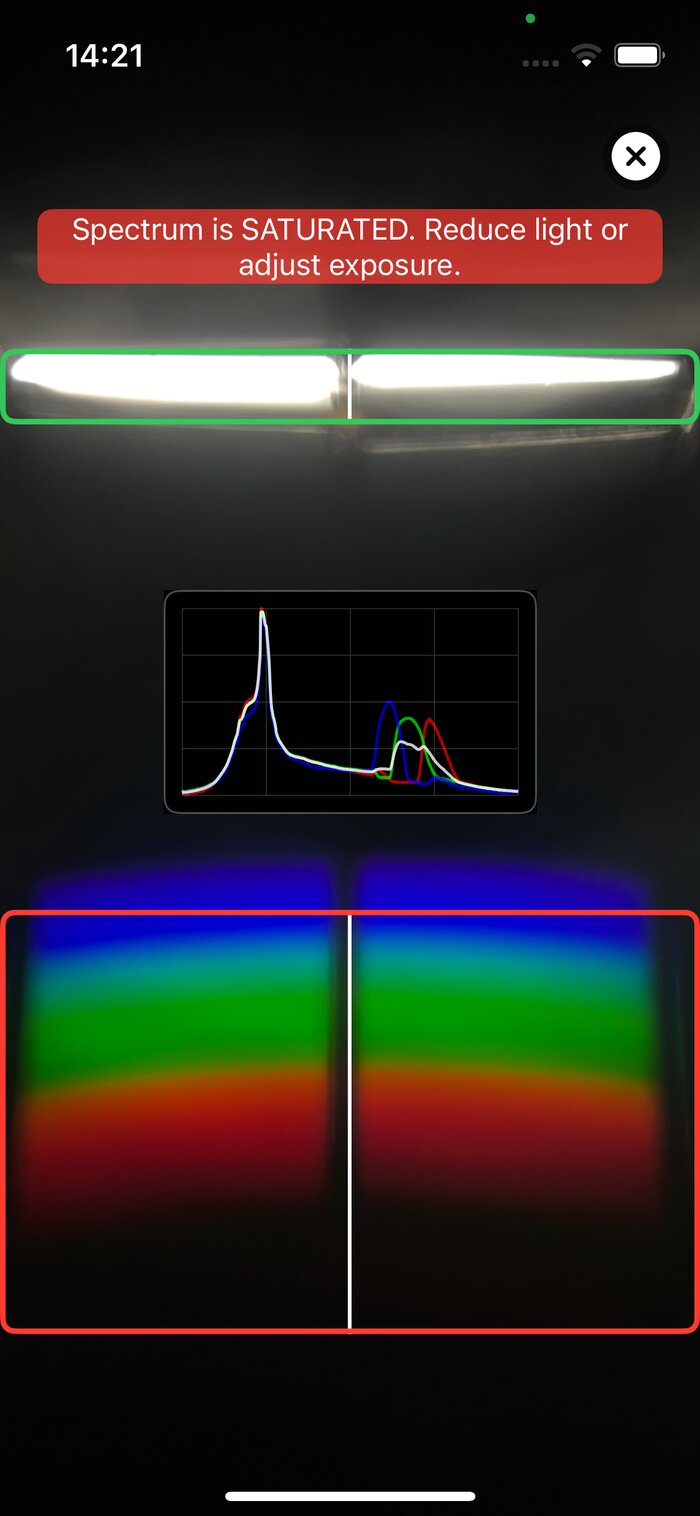
In practice, iSPEX measures the raw inputs to that calculation — downwelling sky irradiance, sky radiance and water-leaving radiance — through a captured spectrum image, which the processing pipeline then converts into calibrated Rrs values.
We have not published a processed Rrs-vs-wavelength plot here because none has been made publicly available yet — only the raw campaign radiometry. The underlying raw data is open on OSF rather than shown here as a synthetic or illustrative graph.
The 2025 validation
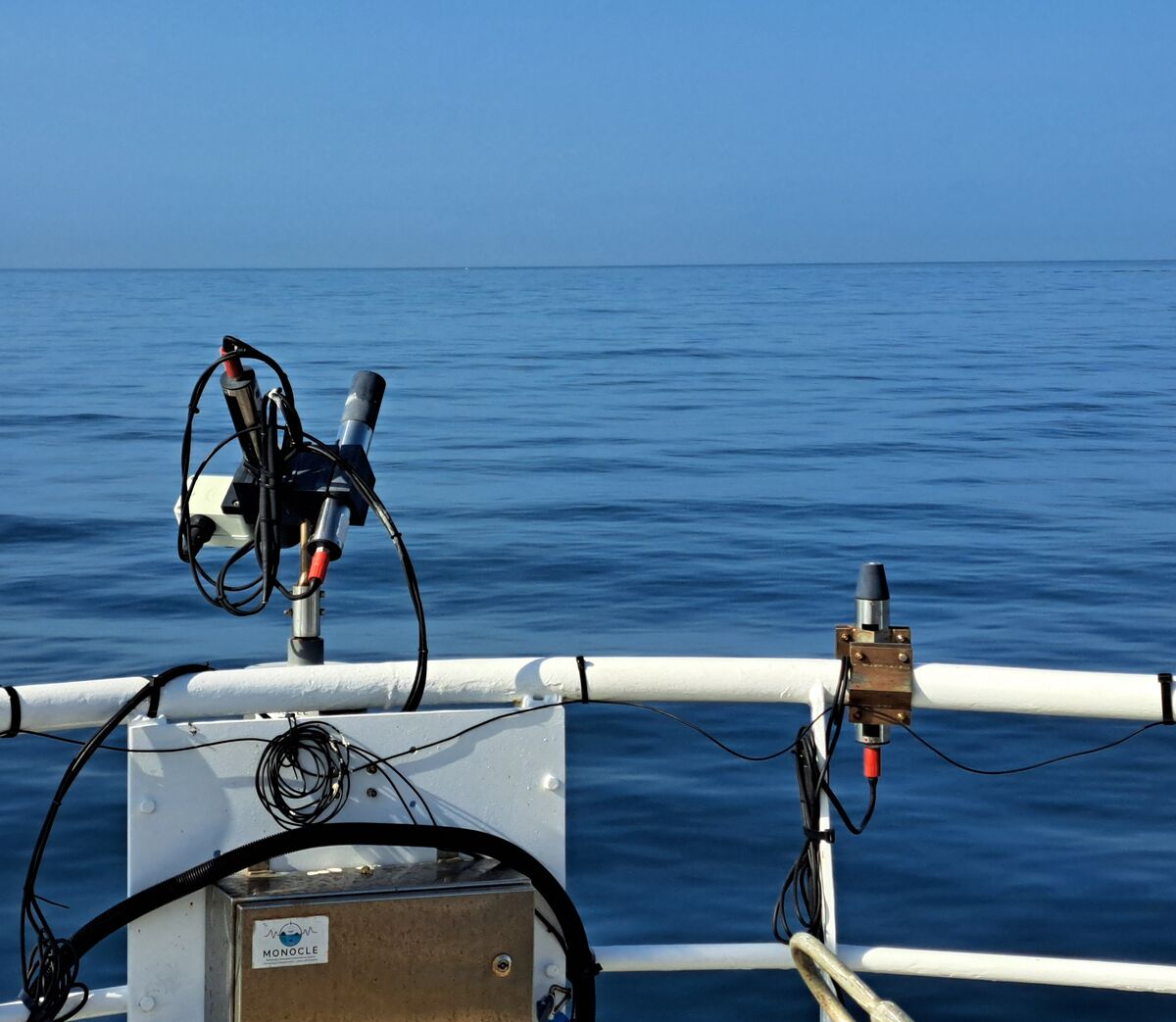
Prof Stefan Simis and Dr Tom Jordan at Plymouth Marine Laboratory (PML) successfully derived above-water remote-sensing reflectance (Rrs) during multiple 2025 campaigns using iSPEX2. This was not a promotional demonstration: iSPEX2 observations were compared against professional reference radiometry used in ocean-colour research, and the result established that the instrument can produce Rrs through a validated method.
Pocket Science's contribution was the technical work behind those campaigns: the app, the instrument, and the processing pipeline that turns a captured spectrum into calibrated Rrs values. Scientific partners retain their own scientific contributions and roles in this work.
The field record for these campaigns is public:
- OSF iSPEX2 project — protocols, app guidance, raw campaign data and processing results, including the 2025 field campaigns.
- Registered validation study — the OSF preregistration for the aquatic-reflectance validation method (registered 23 September 2024).
Current status & availability
iSPEX is an active research and development line. The latest units were distributed to research groups at the end of 2025. No units are currently available to order. iSPEX2 is not yet consumer-ready; a further production phase requires investment in manufacturing, calibration, software, support and deployment.
Scientific lineage & ownership
iSPEX is owned by Pocket Science. Its scientific origins are at Leiden University. Pocket Science developed the iPhone implementation and the surrounding apps, processing, backend and deployment system. Scientific partners retain their own scientific contributions and roles.
Research & partnership opportunities
Pocket Science is actively looking for partners who share the ambition of a serious environmental instrument in citizens' hands. We welcome contact from:
- Funded validation projects extending the 2025 Rrs work, or opening new validation domains
- Research groups wanting to deploy iSPEX2 in the field
- Citizen-observatory programmes looking for a calibrated, distributed measurement method
- Production and calibration partners for a future manufacturing phase
- Investors and grant programmes supporting the next development phase
- Universities and institutes wanting to independently test the method
FAQ
Downloads
Relevant papers
Mapping atmospheric aerosols (2014)
The original iSPEX aerosol campaign's results: Snik et al., Geophysical Research Letters, vol. 41, with 3,187 iSPEX citizen scientists as co-authors.
Read PaperOpen Science Framework
Access our open science resources and data for iSPEX 2, including the 2025 Rrs validation campaigns.
View OSF ProjectRegistered validation study
OSF preregistration for validating aquatic reflectance measurements with iSPEX2 (registered 2024-09-23).
View PreregistrationiSPEX calibration instructions
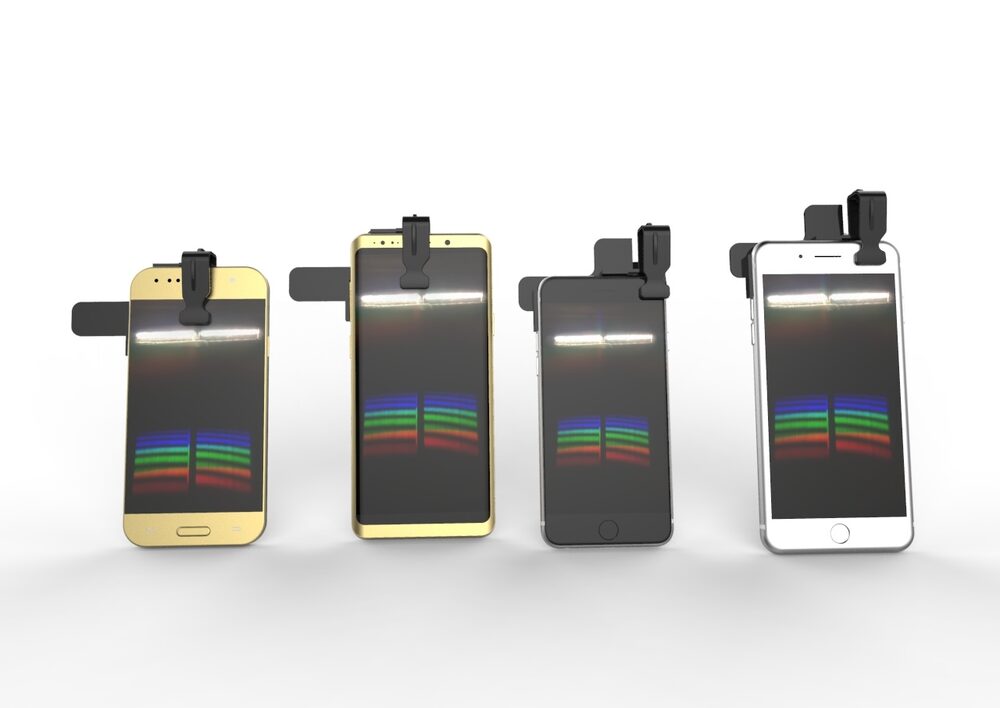
The iSPEX unit is composed of a backplate, tailored to your phone, and a detachable unit. Two configurations have been developed: a spectrometer version and a polarizer version. Each unit comes with a barcode for support purposes.
To install, remove any cases from your phone (screen protectors can stay) and ensure the camera is clean, as the iSPEX is an optical add-on. Choose the 1x zoom camera (you can find out by positioning the unit and check the screen if it gets dark.
To use with the iSPEX app, position the unit so the horizontal bar, referred to as the slit, aligns within the top box on your screen, making sure both parts of the spectrum are visible. Adjust the exposure if necessary, keeping in mind that overexposed images cannot be used. Press the capture button to take a measurement. The image will automatically be sent to our server for processing. Results, including graphs and data, will be accessible within seconds by pressing the 'MySPEX' button located in the top right corner.
Evidence & resources
Pocket Science iSPEX case study
The full story of the 2025 validation, the vision, and where the project stands today.
Read the case study →Pocket Science support & research page
Research status, Rrs validation details, and support for existing unit holders.
Visit the support page →Pocket Science citizen-science & observatory work
Pocket Science's broader work building citizen-science apps and scientific measurement tools.
See citizen-science apps →Open Science Framework project
All protocols, app guidance, reference data, raw campaign data and processing results, openly licensed CC BY-NC-ND 4.0.
Open the OSF project →